


Subtotal $0.00

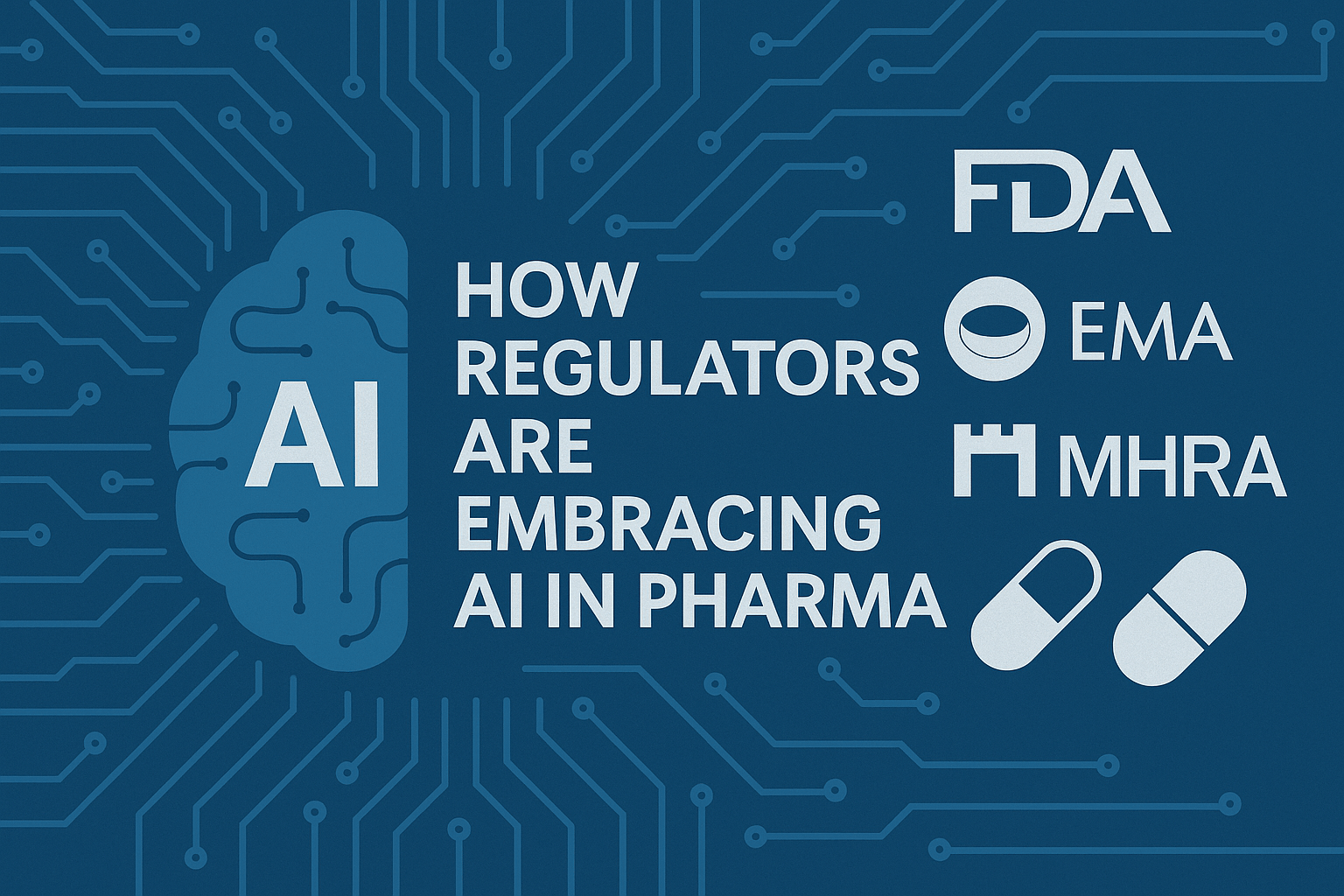
Artificial Intelligence is no longer a futuristic concept in medicine — it’s rapidly becoming a core enabler of regulatory innovation. As AI-driven tools enter drug discovery, clinical trials, and patient monitoring, regulators across the globe are stepping up with structured frameworks, digital sandboxes, and AI-native tools.
Here’s how the “Big 3” regulators – FDA, EMA, and MHRA – are leading the charge:
________________________________________
🇺🇸 FDA: Enterprise-Level Structured Analysis (ELSA)
In July 2025, the U.S. FDA unveiled ELSA, an AI-powered internal tool designed to:
• Analyze vast volumes of regulatory data
• Review clinical protocols faster
• Detect trends, outliers, and performance signals across divisions
ELSA reflects the FDA’s push toward data-driven oversight, allowing smarter decision-making and faster turnaround – all while maintaining scientific rigor and public safety.
👉Read more
________________________________________
🇪🇺 EMA: Scientific Explorer & AI Observatory
The European Medicines Agency (EMA) launched its AI Observatory to monitor how AI is being used across the medicine lifecycle – from manufacturing to pharmacovigilance.
Key highlight: the Scientific Explorer tool- a powerful AI-enabled search engine that helps regulators across the EU access past decisions, advice letters, and regulatory documents in seconds.
This initiative supports transparency, traceability, and evidence-based regulation aligned with the upcoming EU AI Act.
👉Explore EMA’s AI Observatory
________________________________________
🇬🇧 MHRA: AI Airlock
The UK’s MHRA is piloting a groundbreaking initiative called the AI Airlock- a regulatory sandbox where developers can test high-risk AI systems under real regulatory supervision.
Currently in Phase 2 (launched June 2025), the Airlock enables:
• Testing of adaptive and real-world-data-driven AI
• Collaboration between innovators and MHRA experts
• Early identification of regulatory and safety risks
It’s a bold move toward real-time, anticipatory regulation that keeps pace with innovation while safeguarding patients.
👉Learn about MHRA’s AI Airlock
________________________________________
Why This Matters
These initiatives show that global regulators are no longer passive observers — they’re becoming active shapers of AI in medicine.
From internal tools (like ELSA) to external-facing ecosystems (like Airlock), regulators are embracing:
• AI explainability & auditability
• Human-in-the-loop oversight
• Faster, smarter, safer regulatory workflows
As AI continues to redefine pharma, companies must ensure their innovations are not only cutting-edge but also regulatory-aligned, trustworthy, and ready for scrutiny.
